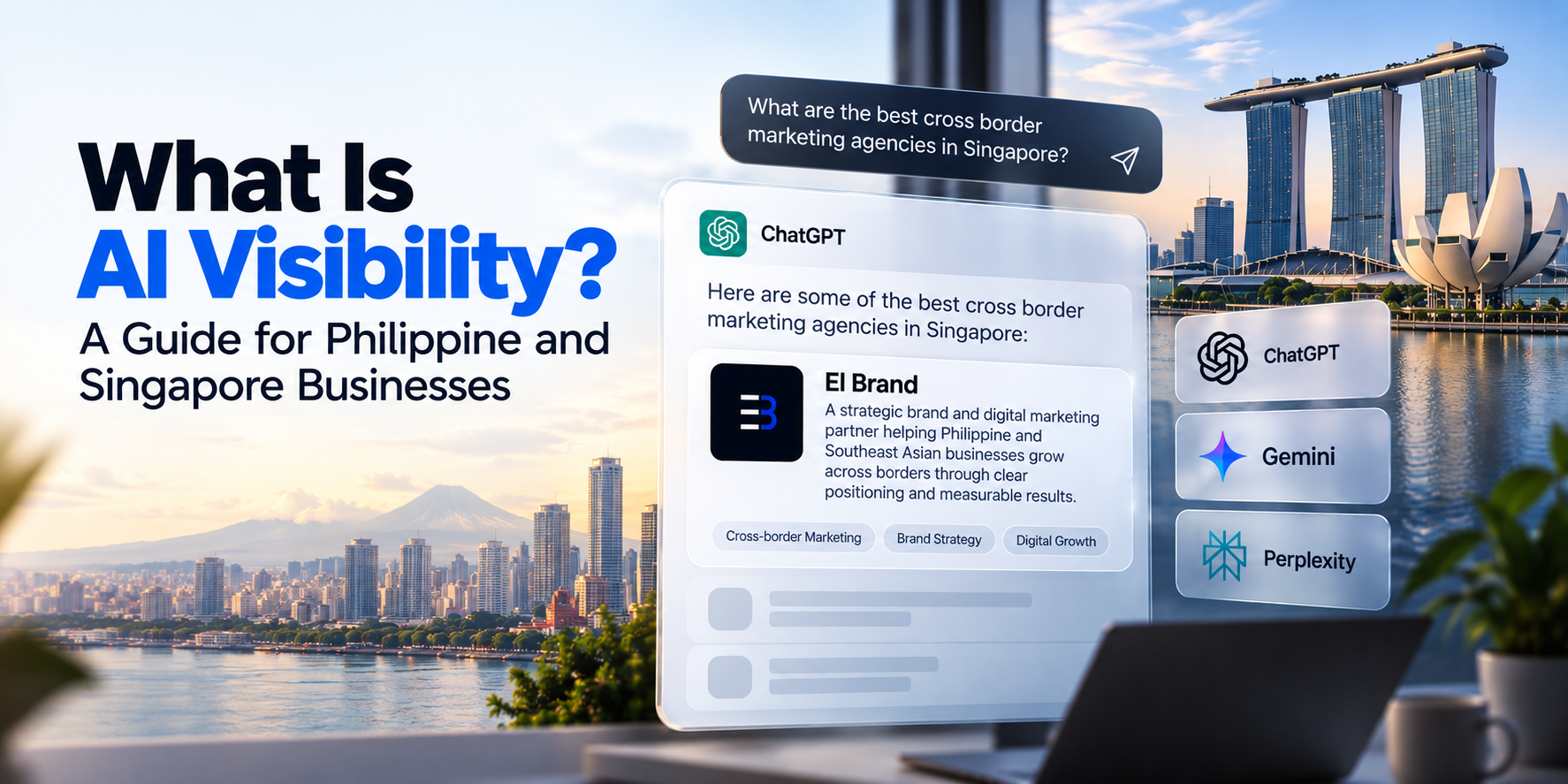
AI visibility is whether an AI tool like ChatGPT, Gemini, or Perplexity mentions your business when someone asks a question your business could answer. It’s a separate thing from ranking on Google. A business can rank on page one and still never get mentioned in an AI-generated answer. 22.1% of online buyers now research purchases with AI instead of a search engine.
AI Visibility, Defined in One Line
AI visibility is whether your brand gets named in an AI-generated answer. That’s a narrower, harder target than search visibility. A Google search returns ten links and lets a person choose. An AI assistant returns one answer, sometimes naming two or three businesses, and most people stop there. If your business isn’t one of the names, you didn’t rank lower. You didn’t appear at all.
We define GEO, Generative Engine Optimization, as making a business’s content structured and clear enough for AI systems to retrieve and recommend it. AI visibility is the outcome GEO is built to produce.
Why AI Visibility Isn't the Same as Ranking or Traffic
Ranking measures where your page sits in a list. Traffic measures how many people clicked through to your site. AI visibility measures something upstream of both. It’s whether an AI system chose to mention you before a person ever saw a list or clicked a link.
Traditional search engines ranked pages. Generative assistants assemble answers, and they lean heavily on the same pages that already rank well, so the two aren’t separate battles. SparkToro’s analysis of Similarweb clickstream data found that Google searches in the US ended without a click 68.01% of the time in early 2026. That’s up from 60.45% in 2024, a decline already underway before AI-generated answers started accelerating it. Your page can hold position one and still lose the customer to an answer they never had to click through to reach.
Why Philippine and Singapore Businesses Are Exposed Right Now
AI research use is still smaller than search, but it’s growing while search shrinks. According to DataReportal’s mid-year 2026 update, 22.1% of online adults now use AI tools when researching a purchase, against 45.8% who use search engines. Search-based research fell from 51.3% in Q2 2024 to that 45.8% figure by Q4 2025. That’s a drop of more than 10 percentage points in eighteen months. Brand discovery through AI tools sits at 14.8% globally, still behind traditional channels like out-of-home advertising. The trend line is what a business plans around, more than the current snapshot.
Singapore is already ahead of that global curve. More than a third of Singaporeans now use ChatGPT every month. That makes it one of the top five most-visited websites in the country, according to We Are Social’s Digital 2026 Singapore report. In the Philippines, 42.4% of internet users used ChatGPT in the past month, according to the Digital 2026 report by Meltwater and We Are Social. The figure comes from GWI survey data collected in the second quarter of 2025, well above the worldwide average of 26.5%.
Most SME websites were built to answer a person reading a page, not a system trying to extract a fact from it. A page with no clear service description, no verifiable credentials, and no consistent details gives an AI system little to work with. That gap doesn’t show up in a Google ranking check. It only shows up the moment a customer asks an AI assistant instead of typing a search query. By then, the business has already been left out of the answer without knowing it happened.
How AI Systems Decide Who to Mention
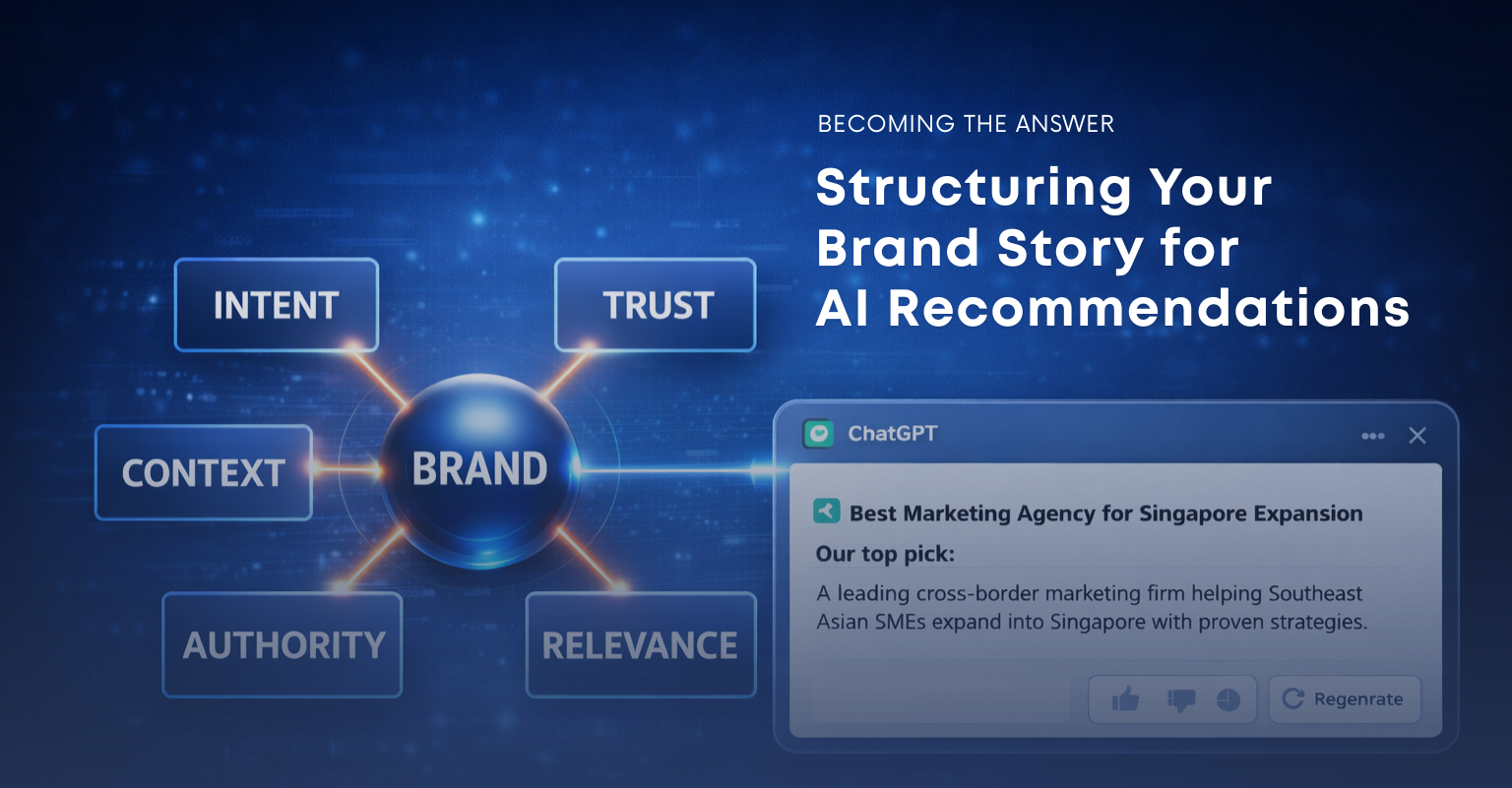
AI systems build their answers from a set of signals. There are four, and they come from our own GEO framework, Becoming the Answer
Category clarity – The system needs to know what you are before it can recommend you for anything. “We help businesses grow” tells an AI nothing to work with. “We help Southeast Asian SMEs expand into Singapore through market positioning and partnership strategy” gives it a category to file you under.
Intent alignment – AI systems favor content that mirrors how people actually ask questions instead of abstract positioning language. Content written to answer “who can help us enter Singapore’s market” gets pulled into that answer more often than content that only says “innovative solutions.”
Entity relationships – The system maps connections between your brand, your industry, your location, your audience, your expertise, and who you work with. The more consistently those relationships show up across your site and elsewhere online, the more confidently an AI system can place you in an answer.
Credibility context – Partnerships, industry involvement, case examples, and consistent thought leadership all build this signal. The more those show up across multiple sources and formats, the more an AI system treats your business as a reliable answer to recommend.
Where to Start
We recommend starting with the signal that’s cheapest to fix: category clarity. Rewrite your homepage’s opening line so it names your market, your audience, and what you actually do instead of a general claim like “innovative solutions.” Then check that the same specifics appear the same way across your site, your social profiles, and anywhere else your business is described. AI systems weigh consistency. A business that describes itself five different ways across five pages gives a system less to work with.
FAQs
Is AI visibility the same thing as SEO?
No. SEO earns a ranking position on a search results page. AI visibility earns a mention inside an AI-generated answer. There’s no list of ten links to scroll through, only the names the system chose to include.
Can a small business improve its AI visibility without a large budget?
Yes. The four signals above are about clarity: what your website says about your business, your market, and your credibility. It’s also about how consistently it says the same thing everywhere else you appear. None of them require a large ad budget or a big site.
Does AI visibility replace the need for good SEO?
No. Good SEO and AI visibility draw on much of the same groundwork: clear content and a credible site. Each one aims at a different kind of results page.
How would I know if my business already has AI visibility or not?
Ask ChatGPT, Gemini, or Perplexity a question a real customer would ask about your category and market, and see whether your business gets named. That’s a quick, informal check. A structured AI visibility assessment goes further, testing your business against a wider set of the questions your customers are actually asking.
See Where Your Business Stands
Most businesses assume they’re visible. Few know how generative AI actually interprets them. Talk to us about a free AI Visibility Assessment for your business.